Would Steve Jobs have allowed gender‑inclusive language in his products?
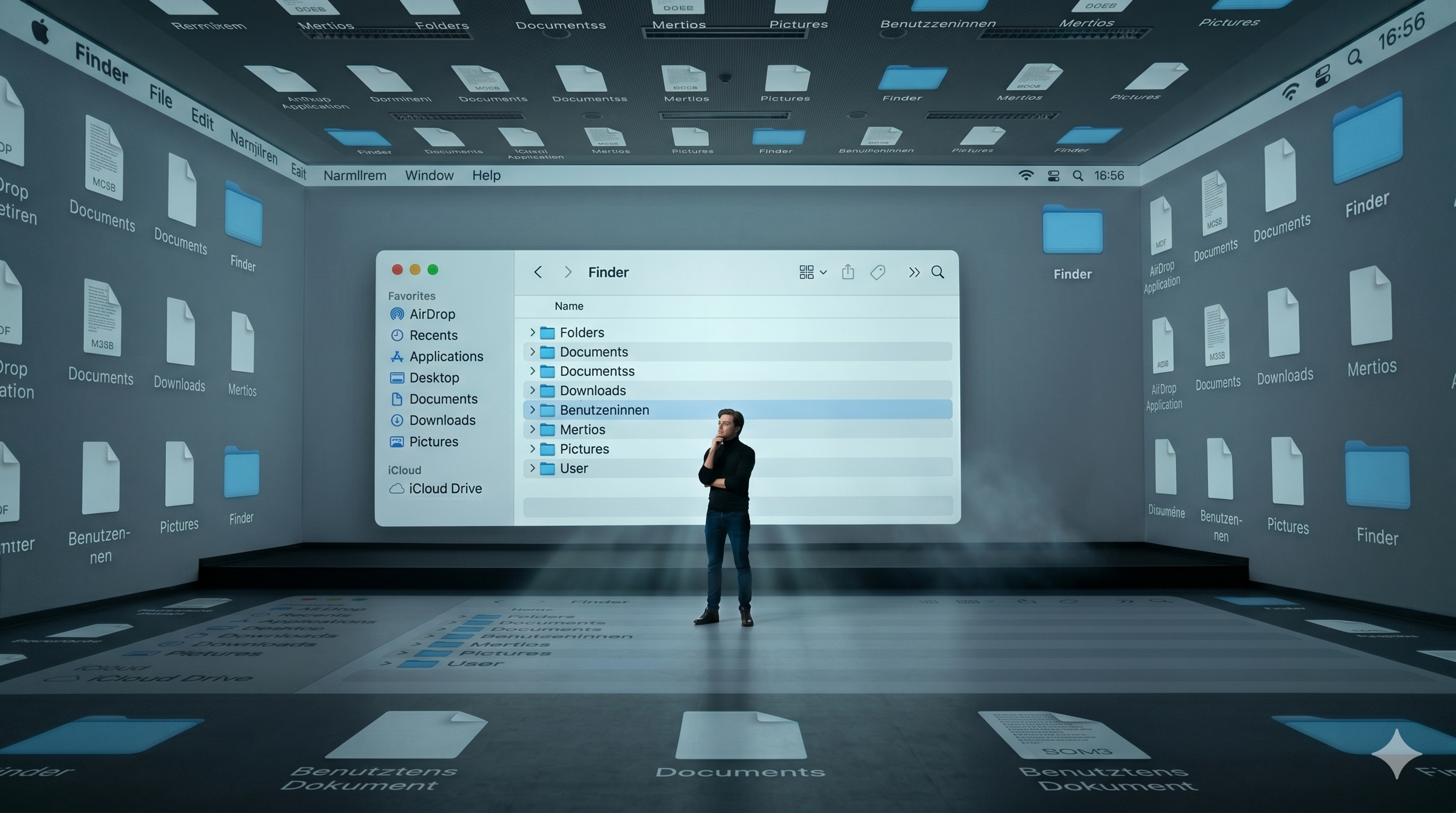
Would Steve Jobs have allowed gender‑inclusive language in his products?When I discovered the new “Users” system folder on my MacBook, I was momentarily speechless.
It’s wild that Apple doesn’t offer this label as an option, but instead hard‑codes it deep inside the system.
For someone like me, who doesn’t use gender‑inclusive language and loves clarity in design, this doesn’t feel quite right.
I respect it when people around me use more radical gender‑inclusive forms in German – I’m fine saying “Mediziner und Medizinerin”, but I don’t go as far as “Benutzer:innen”.
Now I’m seriously wondering: What would Steve Jobs have thought of this?
A genius ahead of his time who preached “focus and simplicity” while simultaneously shaping the Apple brand with “Think Different” – something few others could have done.
The interesting thing is, he swam against the mainstream for so long that, by the time the iPhone was introduced, the mainstream had largely adapted to Apple.

What would Steve Jobs have decided today?
Would he have been on Team “Clean Design & Useability” or Team “Radical Value Communication”?
To avoid answering this on a whim, I asked someone who probably has a better grasp of Steve Jobs’ public statements than all of us put together: my favorite AI chatbot, Perplexity. I asked it: “What are the odds that Steve Jobs would have allowed gender‑inclusive language like ‘Benutzer:innen’ in his products?”
The response, delivered in dry AI logic, was immediate:
- The response, delivered in dry AI logic, was immediate:
There is about a 60–70% chance that Jobs would have viewed the use of gender‑inclusive language in the user interface critically – primarily for reasons of simplicity, readability, and consistency. - At the same time, there is a 30–40% chance that he would have found the underlying values compelling: Apple as a brand that visibly takes a stand and actively shapes social developments.
In other words: From the AI’s perspective – and I largely share this view – Jobs would probably have been the kind of person to say:
“We can support the values behind this. But not like this. Let’s find a solution that’s inclusive yet remains ruthlessly clear.”
He would have viewed the inclusion of gender in the system more as a symptom of an unresolved design problem than as the ultimate solution.
One famous example that illustrates this: all Apple products today have rounded corners.
The first digital representation of a rectangle didn’t have rounded corners. When someone asked if it was possible to display it with rounded corners, the immediate response was, “No, that’s not possible” – an unacceptable answer, and therefore not the final one, for Jobs.
“Users” as a design issue, not a cultural battle
What I find particularly fascinating is the shift in perspective.
The debate over gender is usually framed as a cultural or political battle—for or against.
From Jobs’ perspective, it becomes a radical design question:
- How much complexity can an interface handle before it loses its clarity?
- To what extent can a product reflect a set of values before it begins to interfere with the user experience?
Steve Jobs probably wouldn’t have discussed gendered language on a conceptual level, but rather in terms of function, clarity, and storytelling:
Does this wording fit with the way Apple tells the story of its products?
Or is there a different, more elegant solution that conveys the same attitude but creates less friction?
I find it fascinating that Steve Jobs was already talking about AI‑like applications back in the 1980s.
For him, the computer was “the most remarkable tool we’ve ever invented – the equivalent of a bicycle for our minds.”
Later, he spoke of computers as “agents,” little assistants that anticipate what we need – basically an astonishingly precise foreshadowing of today’s AI agents and language models.
And that’s exactly the kind of “agent” I used for this article:
Perplexity doesn’t so much expand my general worldview as it broadens my perspective and the scope of my thinking – like a bicycle that takes me further than I would usually walk.

What would Steve Jobs have suggested?
Of course, speculating on what Steve Jobs would have said about gender‑inclusive language in macOS is just that – speculation.
But it’s based on something he himself called for: clarity about values, uncompromising design thinking, and the courage to confront both.
In the end, I think the picture fits together pretty well: Steve Jobs was confrontational and deliberately pushed people out of their comfort zones – not just for the sake of it, but to drive quality, focus, and genuine innovation.
If we take his design philosophy one step further, Jobs probably wouldn’t have weighed the pros and cons of “gendered or gender‑neutral” language, but would have turned the question on its head: “Why do we even need the word ‘user’ here?”
The more inclusive – and at the same time typically Apple‑like – solution would likely have been to radically rethink the folder, or at least simply rename it “Profiles” or “Accounts”.
Inclusive in spirit, clear in design.
Here is the list of sources:
- Steve Jobs on Simplicity and Focus
- Steve Jobs, Design Thinking, and Brand Understanding
- Apple and gender-neutral language / “users”
- Apple support page on built-in folders on the Mac, including "Users"
- Articles/blog posts on the introduction of gender-neutral language in Apple systems (including iOS 15, macOS Monterey, and German localization)
https://www.benutzerfreun.de/texten-sprache/gendern-im-betriebssystem/ - Discussions in the Apple community on the topic of “Gendered language on Mac, ‘Users’ folders, and turning it off”
- Steve Jobs, “Bicycle for the Mind,” and Early AI Vision
- Zitat: „What a computer is to me is the most remarkable tool that we've ever come up with. It's the equivalent of a bicycle for our minds.“
- Background article on “Bicycle for the Mind,” including context and original footage [themarginalian
https://joshbrake.substack.com/p/a-bicycle-for-the-mind - Articles and clips on Steve Jobs’ early remarks about computers as “agents” that anticipate what we need (precursors to today’s AI agents)
https://neoma.ai/thinking/blog/9/what-steve-jobs-predicted.htmlhttps://www.cnbc.com/2024/07/20/steve-jobs-describes-generative-ai-in-newly-released-1983-clip.html